Draft One
Discuss how the project that you’re copying raises these questions and write a proposal for a studio-based experiment that would allow you to explore them further. (Word count: approx. 200)
Textiles and weaving have the power to touch us emotionally — just as we touch them physically. There is a powerful, personal, relationship one forms to woven materials; a familiarness, a nostalgia that each one of us taps into when we encounter them. I am interested in this capacity for woven textiles to communicate on the tactual plane as well as the visual, as Hicks’s work achieves.
Hicks’s work within the series varies wildly. Intricately delicate pieces are placed next to raw, emotive ones; monochromatic pieces next to organic, living habitats. Her choice of words that titles her weavings is interesting too; some feel distinctly personal, perhaps diaristic (“As if I did not know” 2016), while others seem to refer directly to the visual and textural features of the piece itself (“four tunnels of exploration” 2015).
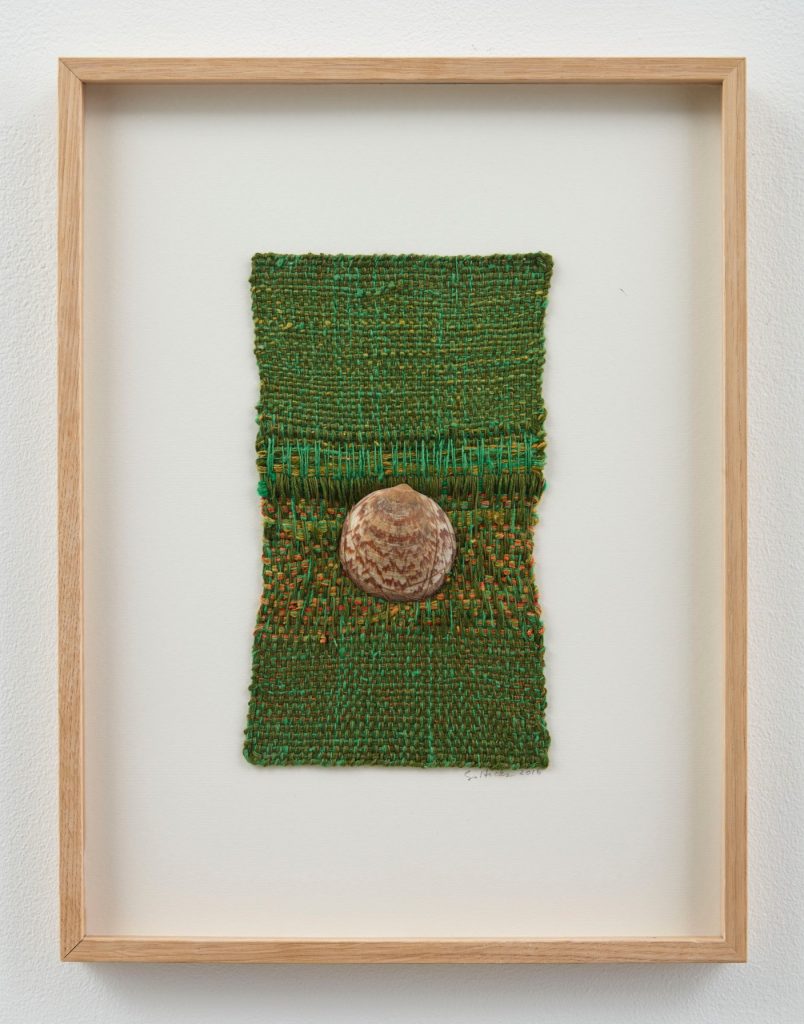
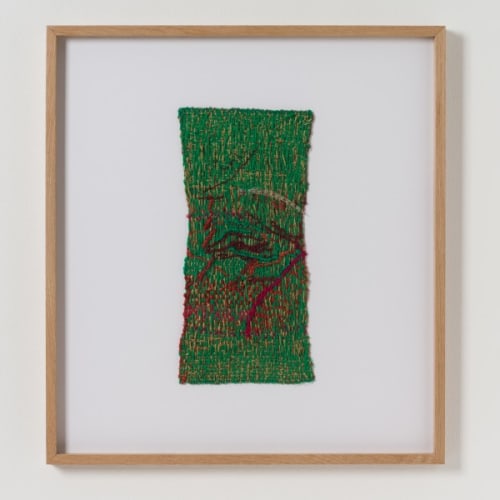
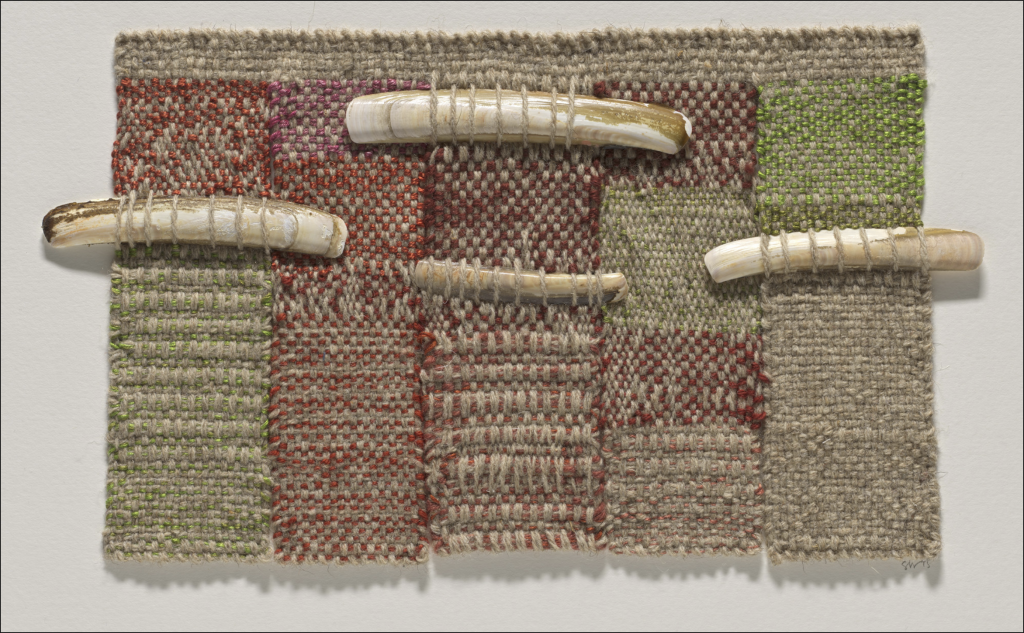
My proposal for the next stage of Iterating is to create a set of small woven pieces that have varying textural and visual attributes and situate them alongside a corresponding set of words or ‘titles’. The placement of the titles, however is up to the viewer, reflecting a personal response to the work and the power that tactile engagement with a piece has to connect to an audience.
Draft Two
Identify a reference from the reading list that you can use as a lens through which to view and analyse your project. Then create a second draft of your writing that advances your enquiry in response to this new context. (Word count: approx. 400–500)
Reading an excerpt from Sara Ahmed’s text Bringing Feminist Theory Home (2017), I found her language and tone reminiscent both of the process of weaving itself and my own project. Ahmed’s reference to slowness (p. 11), “feminist collectivity” (p. 2), and “feminism as a fragile archive, a body” (p. 17), reminded me of the many hands of makers, the histories of women practitioners, and embedded knowledge found and felt within woven textiles. As it relates to my project, the weavings I am making explore the process as a time-based practice; one which connects with an audience visually and tactually, through both the fibres I am using and the inclusion of objects within the textile.
The works I have made so far aim to subvert the perceived functionality of weaving by including items related to my surroundings and environment. In contrast to Sheila Hicks’ Minimes (1956), which include natural objects like shells, sticks and feathers; my works include mundane, every day things like rubber bands, old receipts and pencils. I wanted to use the idea of weaving as a ‘container’, but remove the function of the items being contained by their inclusion in my woven artworks. The items thus become useless relics, evidence of my daily activities. They are removed from their habitual ‘contained’ contexts — desk drawers, pockets, pencil cases — and put on show. Though mundane and related to my own lifestyle, specific times and locations, the items I have chosen so far are both personal and unpersonal; they belong to me, but also to everyone; we all own and accrue versions of these things. By including them in my weavings, I am referencing the modesty of the process and the ability for textiles to invite interaction and touch. Or, as Ahmed expresses, “I aim to keep my words as close to the world as I can” (p. 11).
Carrying this intention forward, my enquiry will further explore everyday materials, their intrinsic tactile qualities and the new meaning they garner once included within a woven textile. Additionally, can I represent a specific period of time (e.g. an hour, a day) through weaving in specific objects to the loom to tap into the everyday? For example, how does the meaning or perception of the coloured plastic netting on oranges and lemons change once it is woven into the loom? Or, perhaps, a shoelace? Can these objects replace yarn itself, or do they need to be included in conjunction with it? How does an audience relate to and interact with these new compound-objects?
This everyday-ness explores the idea of Ahmed’s “we” (p. 2), tapping into ideas of collectivity and shared, universal experiences; but also shared histories. By integrating these items into woven textiles specifically, I am both accessing the ‘now’ of our daily lives and experiences, but also the millennia in which weaving has been developed, taught and shared between [women] practitioners. To borrow Ahmed’s sentiment that “to become a feminist is to stay a student” (p.11), I posit that to become a weaver is to stay a student. The knowledge shared while, and indeed within, weaving and passing this skill on creates a chain of practice that has been in constant development for generations — in itself symbolically related to the textile quipus of the Andean peoples that recorded data, administrative information and even stories (Britannica, 2022). These chains of knowledge, learning and teaching are self evident in the works of textile artists like Anni Albers, Sheila Hicks, Claudia Alarcón and Cecilia Vicuña, who borrow and learn not only from their artistic contemporaries but also ancient and indigenous practitioners (Coxon & Müller-Schareck, 2018).
In summary, the interweaving of items seemingly unrelated (formally, thematically, historically) to weaving practice presents both myself as the author and the audience as viewers with different potential modes of weaving. The tactile differences within the pieces presents weaving as an invitation to touch, to engage, to connect with the material. The material itself asserts weaving as a representation of the self, both as a personal document and a mirror for others. It also presents weaving as a document of time — both time spent (i.e. labour), and chronological time (i.e. a record). Ultimately, to use Ahmed’s words, the weaving becomes about “how we are touched by things; how we touch things” (p. 17), providing “spaces of encounter” (p. 17) that connect viewer to author, and author to shared, ancient practice.
Bibliography
Ahmed, S. (2017) Bringing Feminist Theory Home. Durham, NC: Duke University Press. Extract pp. 1 — 18.
Albers, A., Fox-Weber, N,. Cirauqui, M., Smith, T. (2018) On Weaving: New Expanded Edition. Princeton, NJ: Princeton University Press.
Coxon, A., Fer, B. and Müller-Schareck, M. (2018) Anni Albers. London: Tate Publishing.
Wallenfeldt, J. (ed.) (2025) Quipu, Encyclopædia Britannica. Available at: https://www.britannica.com/technology/quipu (Accessed: 28 February 2025).
Draft Three
Render your text using the tool or medium that you’ve been exploring during this project. This is both a visual and intellectual exercise. How does the text and its meaning change when you translate it in this way?
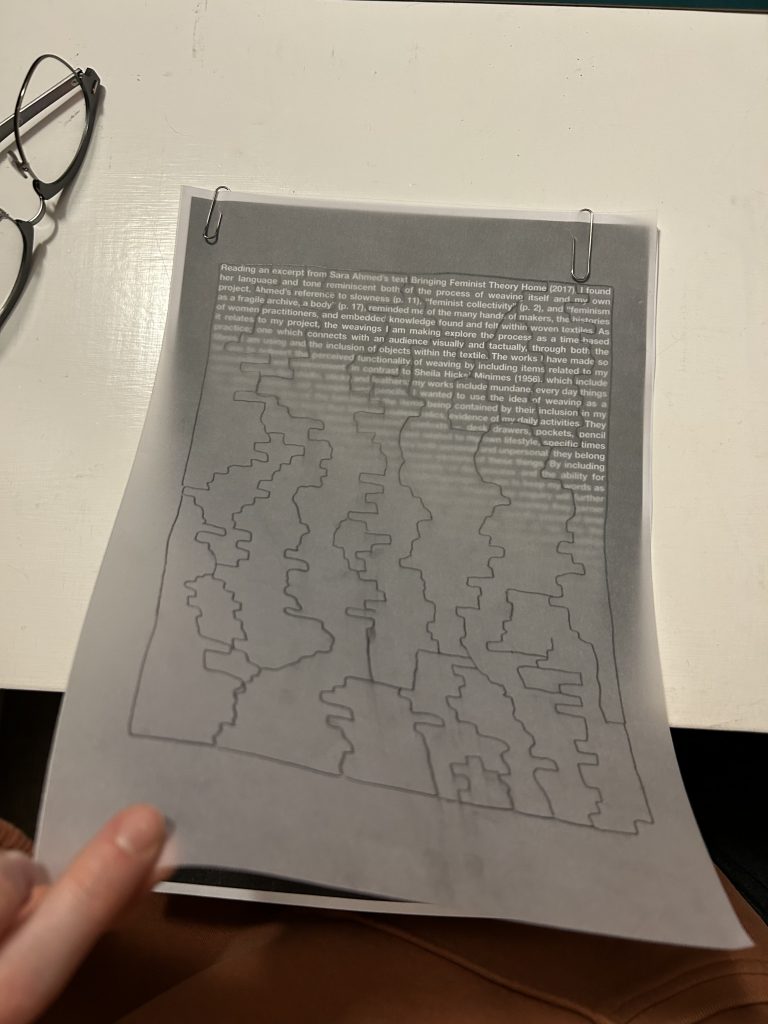
Text and textile are intrinsically linked: the latin texere (to weave) forms the etymological base of both text and textile. To write, then, is to weave.
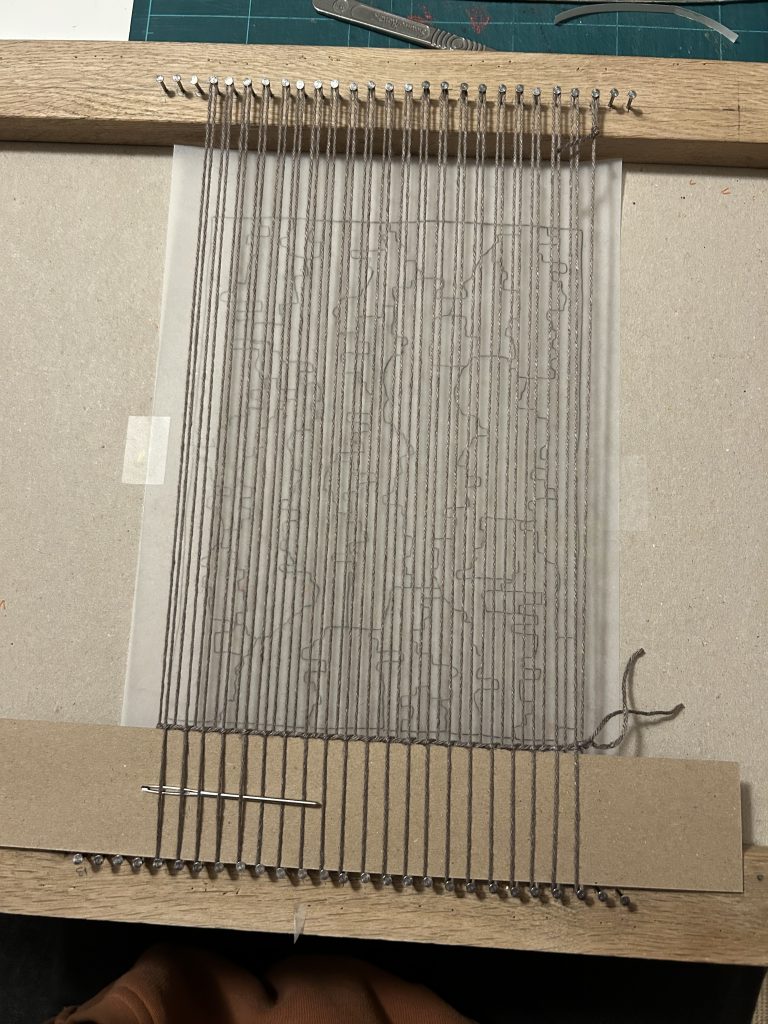
Exploring this link between both writing and weaving, I chose to view my essay as a structure for a pattern; it became my warp. To create the pattern itself, I set the alignment of my text as justified, so rivers of space appeared between the words. The resulting sections that I delineated became the pattern for the weaving.
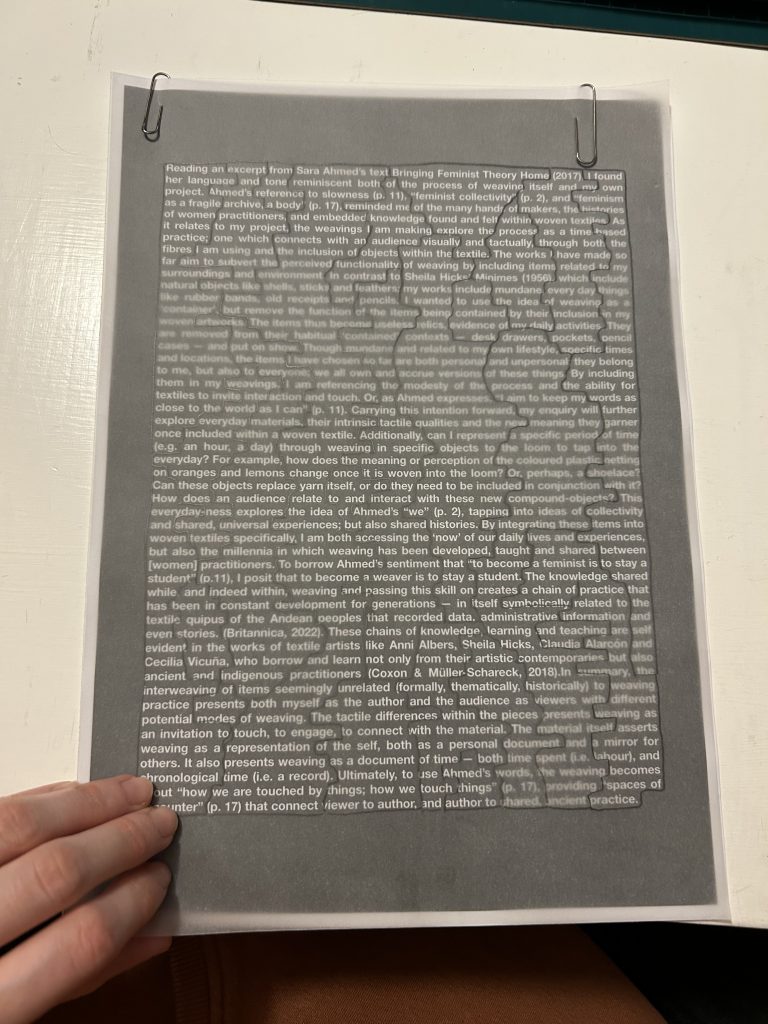
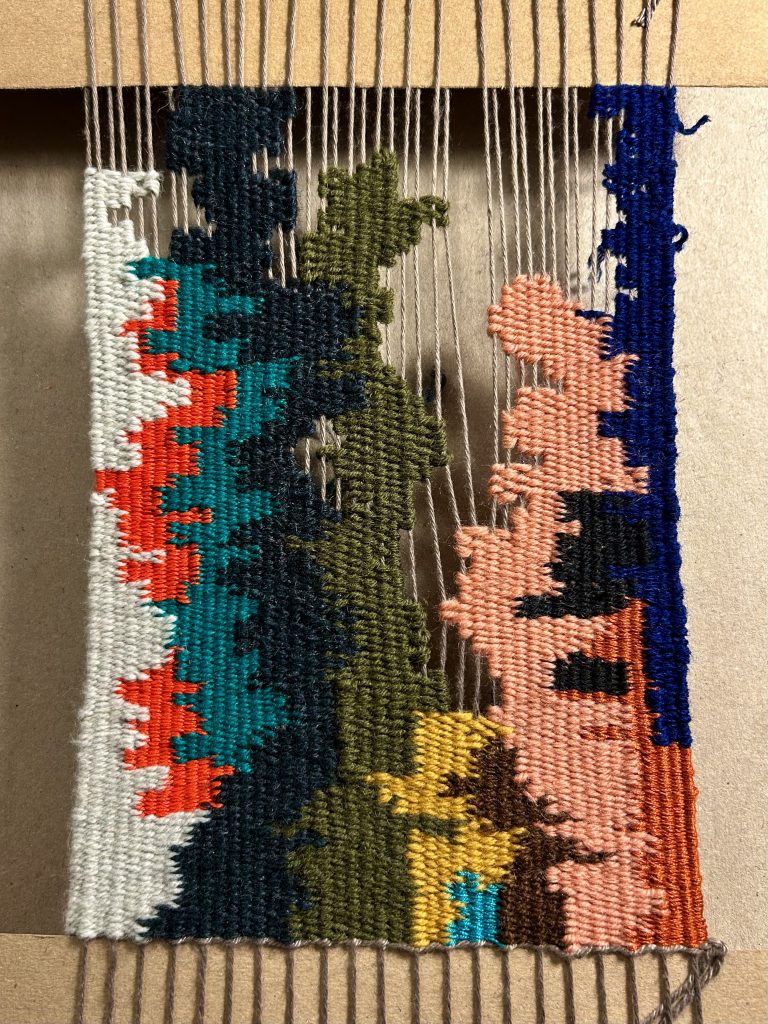
(Unfinished as of 7th Feb but is still in progress!)
Update: 27.02.2025: please see this post for the finished article!
Leave a Reply